Tropical Takamaka

Can you make wine on a subtropical island? Back in Mauritius I find out that yes you can.
Oxenham is a familiar name to Mauritians. The family has been importing and yes, making wine here, for four generations. In the 1930s they imported raisins, soaking and fermenting them to make wine and in the 1960s, they turned to fermenting imported grape must. Today, they continue to be one of the island’s biggest players, importing wines from all over the world both in bulk and in bottle.
Third generation Oenologist Alexander Oxenham has branched out on his own.
I first met Alexander in Bordeaux, when he joined a Bordeaux educator programme in 2007, and then again in 2011 when he was busy experimenting with fermentation in the cellar of his home. But it wasn’t grapes he was fermenting.
Wine but not as we know it
In 2015, he built the Takamaka winery. Named after an endemic tree, it’s high up in the cooler centre of the island, near the sacred Hindu lake, Ganga Talao, where giant statues of Shiva welcome pilgrims.
The Mauritius Lychee
Grapes don’t really suit the Mauritian climate, lychees however thrive. Chinese in origin, they do so well here there’s a variety called Mauritius. The fruits are small with a bright pink peel or shell, very aromatic and with a high proportion of flesh to nut.
Also known as Litchis, they were introduced to the island in the 1700s by the botanist Jean-François Charpentier of Cossigny de Palma when he created an estate from plants collected during his travels across Asia.
The Takamaka lychees are grown on 50 year old trees in orchards to the North of the island. Just like grapes, Alexander controls for ripeness (sugar levels), acidity and aromatic intensity before they are hand-picked. Harvest is November to December, when you’ll see the fruits for sale on roadside stalls across the island. Everyone seems to have a tree in their garden, protected by netting from the voracious fruit bats.
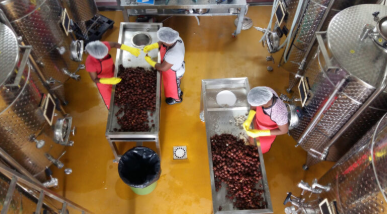
Peeling the lychees in the tiny winery
Laborious
Once in the winery, the fruit is selected, peeled and pitted by hand. A labour intensive job. The pitted flesh is then frozen. As winery capacity is limited, this allows production to be spread throughout the year and makes juice extraction easier. Freezing breaks down cell structure and eliminates the need for added enzymes. Fermentation takes place in small stainless steel tanks, using selected yeasts, then some wines are selected for barrel aging in small American and French oak barrels.

Hand pitting Lychees
The boutique winery is designed to be sustainable, they recuperate rain water for cleaning and all effluent is recycled into the gardens. Bottles sold on the island are returnable, washed and reused.
Visitor experience
As well as wine making, the winery is open to visitors. Pre Covid they were welcoming over 8000 visitors a year, with 95% of sales going to tourists. Numbers are slowly creeping up as Mauritius welcomes visitors again.

Alexander Oxenham tastes the wines with guests at the winery
The winery offers tours and of course tastings. A video shares the process and guests can stay for lunch on the terrace to have fun pairing the wines with food.
The wines, like the fruit, are very aromatic, they have a hint of muscat and rose petals with a slight bitterness on the finish, especially those aged in oak, that makes pairing with local food really interesting.
Despite being a micro winery, Alexander has created a range of dry to sweet wines. At the entry level is the white Aquarel demi sec and the light rosé Aperichy. Bottled in screw cap, they are both perfect chilled down as an aperitif. The Aquarel won a Bronze medal in the London Wine competition and the Rosé looks and smells just like the lychee fruit.
Tanara is a barrel aged dry white whilst Eclipse and Icône are sweet ‘moelleux’ wines with the Icône barrel aged giving it more staying power and bitter orange notes which work well with local spicy food.

The Takamaka range
Local colour
During lock down, islanders rediscovered a lot of local products that were often reserved for visitors. Takamaka is no exception, you’ll now find it championed across the island in hotels and restaurants, by sommeliers proud to surprise guests with an exotic local product.

Takamaka Rosé on the beach – don’t mind if I do!
Please sign up here to receive future blog posts delivered directly to your inbox.
To learn more about Bordeaux, you can buy Bordeaux Bootcamp here, to learn more about Wine and Wellness read The Drinking Woman’s Diet here or join the new online course ‘7 weeks to a liver friendly lifestyle’.